UKS2 Coding Sessions
Children will look to further their understanding of debugging with advanced techniques and processes by looking at how a computer game is created. They will use appropriate software to begin to create their own games. Additionally, they will apply these physical computing skills to program external

Scratch in Upper Key Stage 2 transitions pupils from basic visual coding to complex program design and system architecture. Aligned with Year 5 and 6 learning outcomes, pupils combine conditional logic (if...then...else), variable manipulation, lists (arrays), and custom functions (My Blocks) to build modular, efficient code. Projects shift from simple linear scripts to complex simulation models, multi-level games, and data-driven projects that require systematic testing and step-by-step debugging.
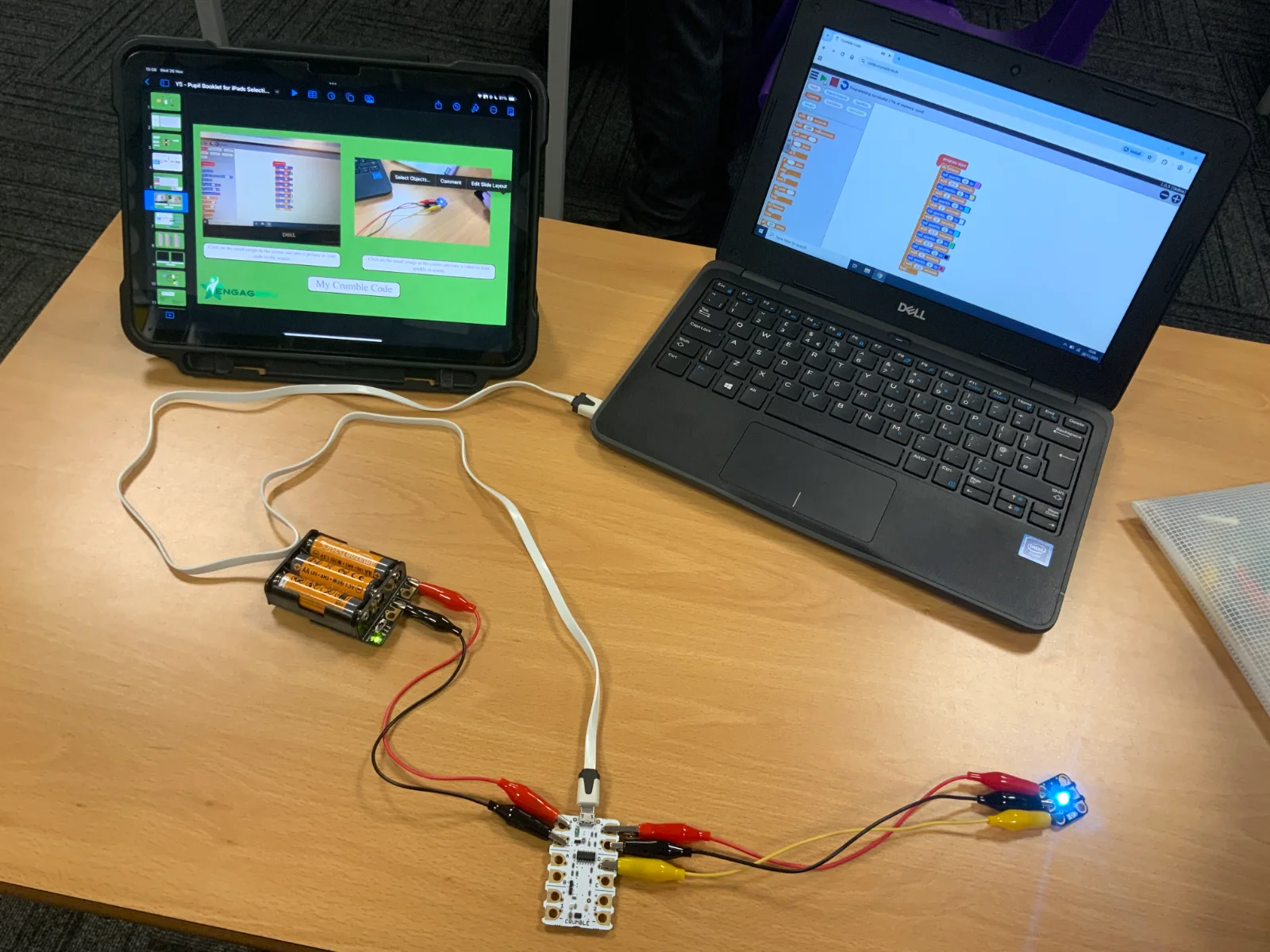
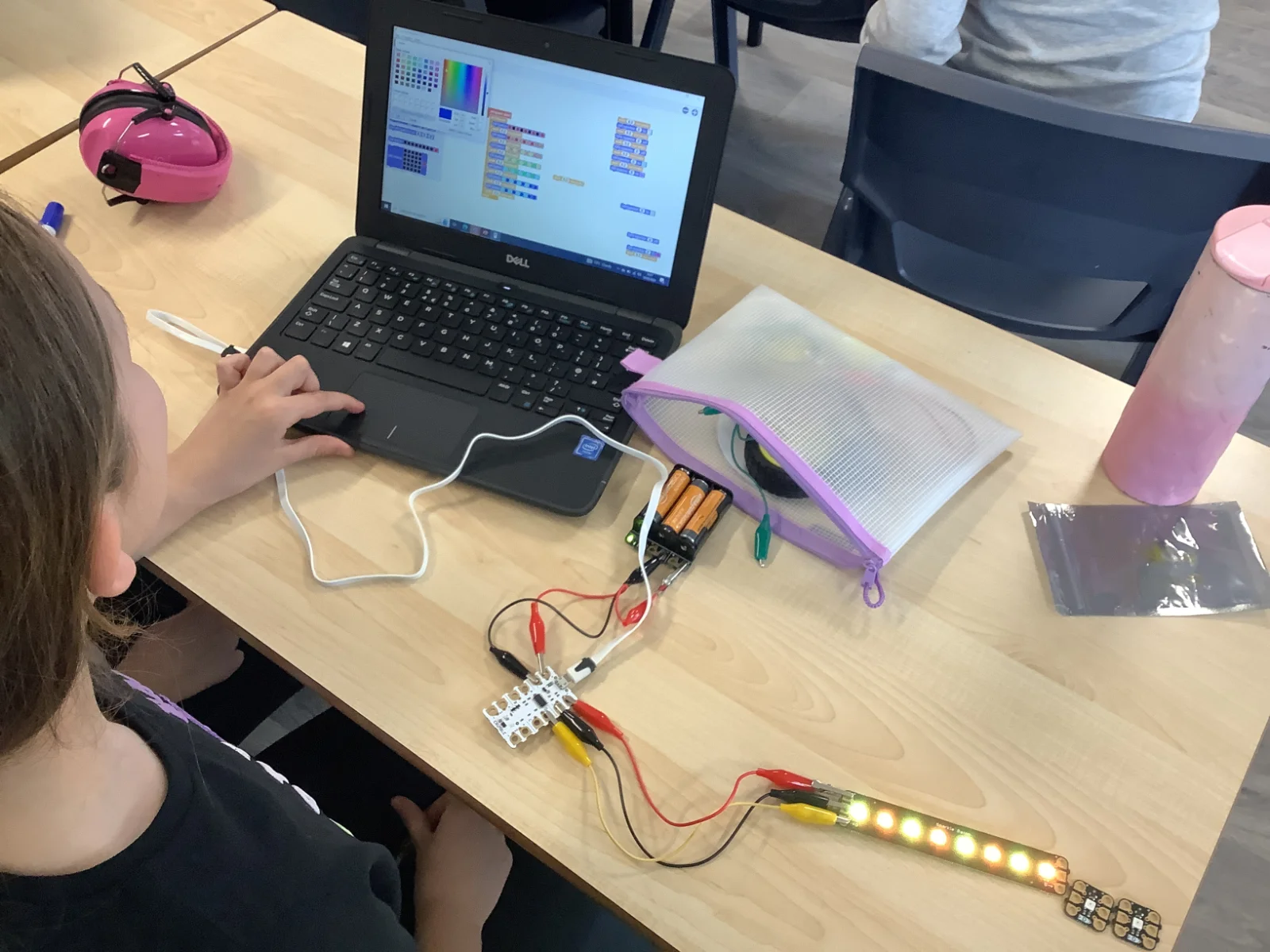
Crumble is an easy-to-use physical computing controller that bridges the gap between on-screen visual coding and real-world electronics. Using a simple block-based coding environment, pupils program physical components—such as controlling motor speeds, lighting up Sparkles (RGB LEDs), and responding to switch inputs. It introduces learners to physical circuit building and motor control while embedding key computing concepts like loops, conditional logic, and variables.
The BBC micro:bit is a pocket-sized programmable microcontroller designed to introduce pupils to advanced physical computing, sensor integration, and radio communication. Using block coding, pupils write software that interacts with built-in hardware, including a 5x5 LED matrix display, accelerometers, compasses, light/temperature sensors, and buttons. It allows children to design real-world smart devices, physical games, and wireless communication systems.
What the session could include
- Classroom Activities
- Year 5 & 6 (Upper Key Stage 2):
- Advanced Selection & Variables in Scratch: Designing interactive multi-level games and simulations using dynamic variables (scores, timers, health bars) and complex selection logic (if...then...else) to manage game states and sprite interactions.
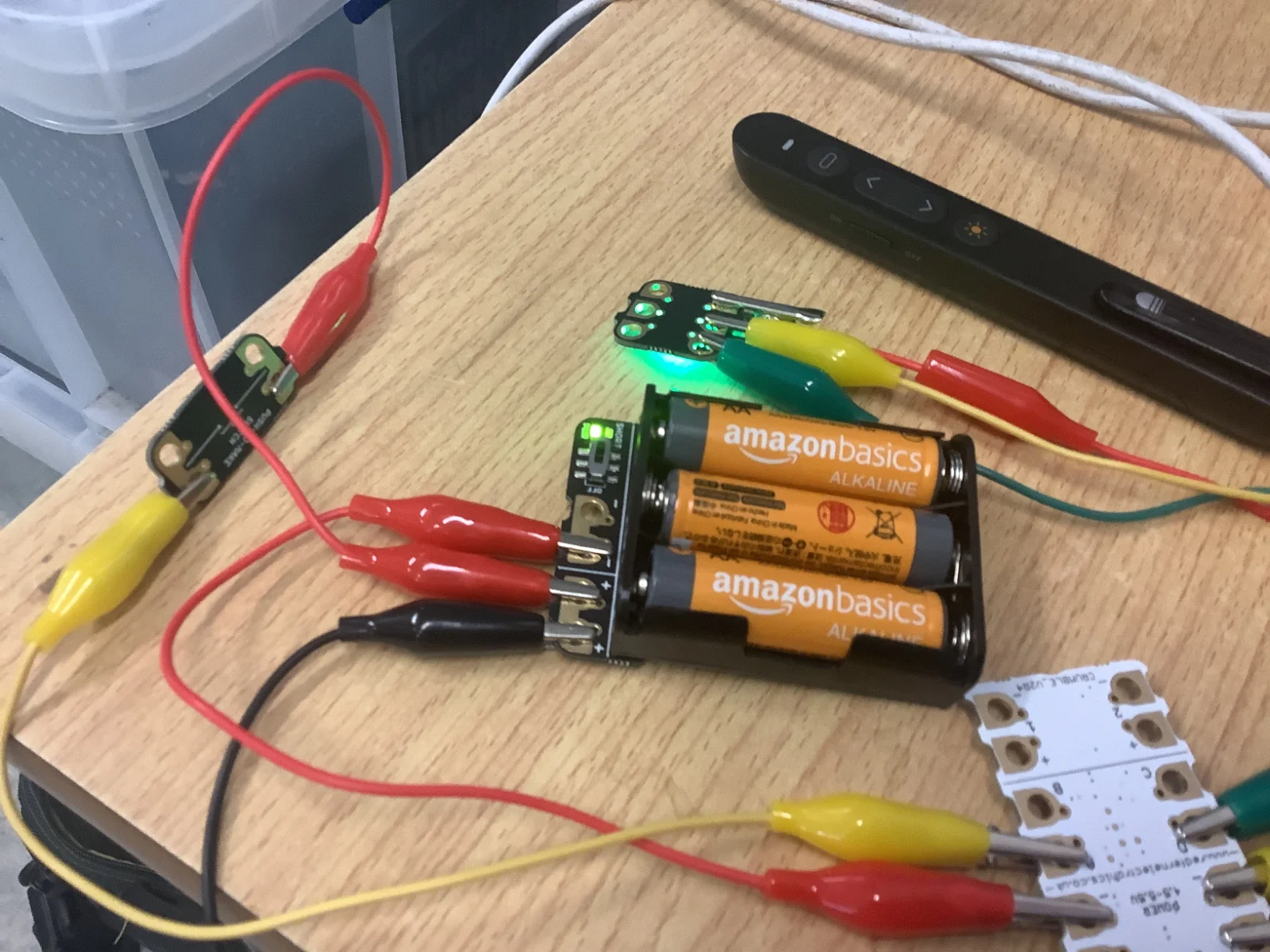
- Physical Computing & Motor Control (Crumble): Building and programming physical circuits using alligator clips, controlling motor directions, regulating speeds, and creating dynamic lighting sequences with Sparkles triggered by physical switches.
- Sensory Devices & Radio Communication (BBC micro:bit): Programming microcontrollers to read ambient environmental data (light, motion, temperature) to construct smart devices (such as step counters or burglar alarms) and using radio messaging to send wireless data between devices.
In the classroom